

AI as a Structural Educational Rupture
I did not plan to write this book.
What I planned was a lecture. In early 2026, I stood before faculty and students at Albukhary International University in Malaysia to speak about artificial intelligence and the future of higher education. I had prepared what I believed was a comprehensive enough treatment of the subject, one that could be delivered in the time available and leave the audience with a clear sense of the transformation already underway.
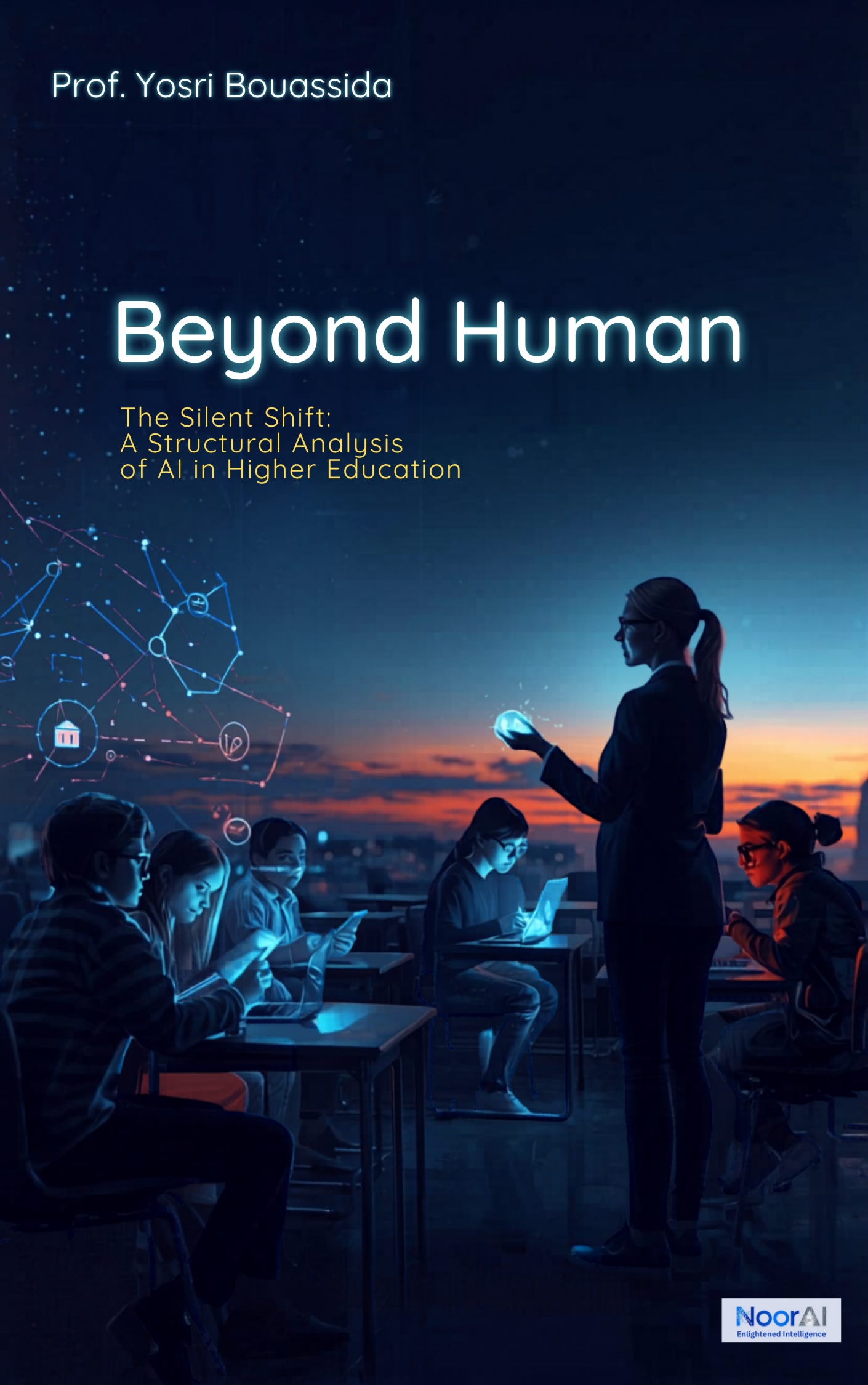
What I had not prepared for was the audience itself.
The questions that followed my lecture told me something I had not fully anticipated. They were not polite, surface-level questions. They were deep, urgent, and genuinely unsettled. Faculty members asked about their own relevance in AI-mediated classrooms. Students asked about the value of their degrees in a world where machines could generate the same outputs their education was training them to produce. One student, at the end of the session, approached me with a question I did not expect. He asked whether I had a book he could buy.
I did not. But that question stayed with me.
It told me that the conversation around AI and education had already outgrown what a single lecture could adequately address. The topic was not simply large. It was structurally complex in a way that demanded sustained reflection, not episodic presentation.
What concerned me most, listening to those questions, was not the complexity itself. It was a particular pattern of thinking I noticed on both sides of the room. Some faculty members were openly hostile to AI, determined to fight its presence in their classrooms, convinced that resistance was both possible and necessary. Some students, on the other hand, had already quietly surrendered to it, using it not as a tool but as a replacement for their own thinking. Both responses, I realized, were forms of the same failure.
Because artificial intelligence is not a policy question that institutions can resolve by taking a position. It is a structural transformation already reshaping how knowledge is accessed, how learning unfolds, how academic production is generated, and how the relationship between intellectual effort and understanding itself is evolving. Institutions that ignore its benefits will be overtaken by it. Institutions that adopt it without thinking will be hollowed out by it.
The danger is not artificial intelligence. The danger is the absence of serious thinking about what it actually changes, and what it does not.
This book was written to contribute to that thinking.